Des Moines Flooding: Is Your Sump Pump Ready for the Next Heavy Rain?
After an unusually wet September, Des Moines homeowners have good reason to pay attention to what’s happening below their homes.
Local officials have been preparing for potential flooding as saturated ground, additional rainfall, and rising rivers increase flood concerns across Central Iowa. Polk County emergency officials have also warned that because the ground is already saturated, sump pumps may begin running sooner than homeowners typically expect during additional rainfall. KCCI
That makes now a particularly important time to ask a simple question:
Is your sump pump ready?
A sump pump can spend months quietly waiting in the basement and then suddenly become one of the hardest-working pieces of equipment in your home. When the ground is saturated and water begins collecting around the foundation, that isn’t the time you want to discover that your pump, discharge line, or backup power source has a problem.
Here are a few things Des Moines-area homeowners should know.
Why Saturated Ground Matters to Your Sump Pump
Your sump pump doesn’t respond only to rainfall falling directly around your house.
Water moves through the soil surrounding your foundation. When that soil is already saturated, additional rainfall has fewer places to go.
That’s one reason current conditions deserve attention.
KCCI reported this week that Polk County emergency management officials expect sump pumps may activate sooner than homeowners are accustomed to because groundwater levels are already high. KCCI
For homeowners, that means the amount of rain falling during the next storm doesn’t necessarily tell the whole story.
Your sump pump may already be dealing with water accumulated from previous rainfall.
When Was the Last Time You Tested Your Sump Pump?
A sump pump can look perfectly fine while sitting in the pit.
What matters is whether it works when water arrives.
Advanced Plumbing recommends regular sump pump maintenance and annual inspections, preferably before storm season. An inspection can include cleaning the pump and pit, checking the float switch, testing the backup power source, and making sure the discharge line is clear. Advanced Plumbing
There are also warning signs homeowners shouldn’t ignore.
A sump pump that makes unusual noises, runs constantly, fails to activate, shows signs of rust or corrosion, or struggles to keep up with incoming water deserves attention. Advanced Plumbing
During a stretch of wet weather, those warning signs become much more urgent.
Learn about Advanced Plumbing’s sump pump repair, maintenance and installation services
What Happens If the Power Goes Out?
There is an uncomfortable irony about sump pumps.
Some of the weather conditions most likely to make you need one can also cause a power outage.
Your primary sump pump may be working exactly as intended, but if the home loses electricity during a storm, a standard electric pump cannot continue operating without another power source.
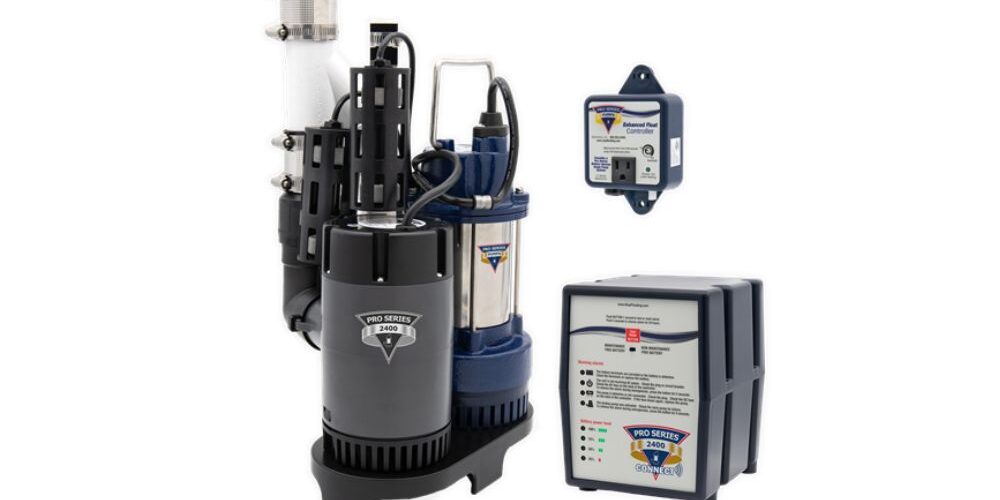
That’s where a battery backup sump pump system becomes important.
A backup system is designed to take over when the primary pump loses power or cannot operate. Rather than replacing the primary pump, it provides another layer of protection.
Think of it less as a second sump pump and more as a contingency plan.
You hope you never need it.
But a storm is a terrible time to discover that you did.
Don’t Forget About the Battery
Installing a backup system isn’t the end of the conversation.
The battery itself needs attention.
A backup pump is only useful if its power source is ready when the electricity goes out. That makes battery condition and testing part of routine sump pump maintenance.
If you already have a battery backup system, now is a good time to ask:
- Has the backup system been tested recently?
- Is the battery still within its expected service life?
- Does the backup activate properly?
- Is the entire system capable of operating when the primary pump cannot?
If you don’t know the answers, that’s worth finding out before the next round of heavy rain.
Is an Older Sump Pump Worth Replacing Before It Fails?
Age alone doesn’t tell you whether a sump pump is about to fail, but it belongs in the conversation.
Advanced Plumbing generally identifies the 7-to-10-year range as a point when homeowners should start considering replacement, particularly if a pump has already experienced problems or struggled during heavy rainfall. Advanced Plumbing
Current weather conditions provide another reason to evaluate an aging system.
Replacing equipment proactively gives you the opportunity to select the appropriate pump, inspect the rest of the system, and test everything under controlled conditions.
Waiting for failure makes the decision considerably less convenient.
Advanced Plumbing’s current upgraded sump pump offering also includes a four-year warranty, providing additional protection for homeowners making that investment.
Des Moines Homeowners May Qualify for Up to $1,500
There is another resource Des Moines residents should know about.
The City of Des Moines operates a Private Property Protection Program designed to help address certain sources of infiltration and inflow into the sanitary sewer system.
Under the current program terms, qualifying property owners can receive reimbursement for 100% of eligible costs, up to $1,500 per property. PPPP Terms and Conditions (June…
Eligible work includes:
- New installation or redirection of a sump pump so foundation and area drain water discharges somewhere other than the sanitary sewer, such as a rain garden, storm sewer, or ground surface
- Disconnecting roof leaders from the sanitary sewer
- Installing a new backwater valve PPPP Terms and Conditions (June…
There are important requirements, however.
Apply Before the Plumbing Work Begins
This is the part homeowners should pay particular attention to:
Work cannot begin until the application has been pre-approved by the City.
The program also requires the work to be completed by a licensed plumber under a plumbing permit. According to the current terms, applications must be received by June 1, 2028. After completion, homeowners must provide documentation including an itemized invoice, proof of payment, plumbing permit number, and W-9. PPPP Terms and Conditions (June…
In other words, don’t install a sump pump and assume you can apply for reimbursement afterward.
Check your eligibility and obtain approval first.
Review the City of Des Moines Private Property Protection Program
A Quick Sump Pump Preparedness Checklist
With Central Iowa experiencing saturated conditions, take a few minutes to check your system.
Listen to your pump.
Unusual sounds can be an indication that something needs attention.
Test the float.
Make sure the pump activates as expected.
Look at the sump pit.
Debris can interfere with operation.
Check the discharge line.
Water needs a clear path away from the home.
Test your battery backup.
Don’t assume the backup works simply because it’s installed.
Consider the pump’s age.
If you don’t know when it was installed, find out.
Know who to call.
Don’t wait until water is entering the basement to start looking for help.
Prepared Is Better Than Surprised
No sump pump can prevent every possible flooding situation, and a sump pump isn’t a substitute for following local emergency guidance during a significant flood event.
But when groundwater begins accumulating around your foundation, a properly operating sump pump and reliable backup system can provide an important layer of protection for your home.
Right now, Des Moines homeowners have a particularly good reason to pay attention.
If you’re unsure about the condition of your sump pump, need a battery backup system, or want to understand whether your property may qualify for the City’s Private Property Protection Program, Advanced Plumbing can help you evaluate your plumbing and understand your options.
Don’t wait for water in the basement to start asking questions.
Can Des Moines homeowners get help paying for a sump pump?
Yes. The City of Des Moines Private Property Protection Program may reimburse eligible property owners for 100% of qualifying costs up to $1,500. Certain new sump pump installations or redirections may qualify, but homeowners must receive City pre-approval before work begins.