Where Do Pipes Freeze First? A Homeowner’s Guide to Winter Plumbing Weak Spots
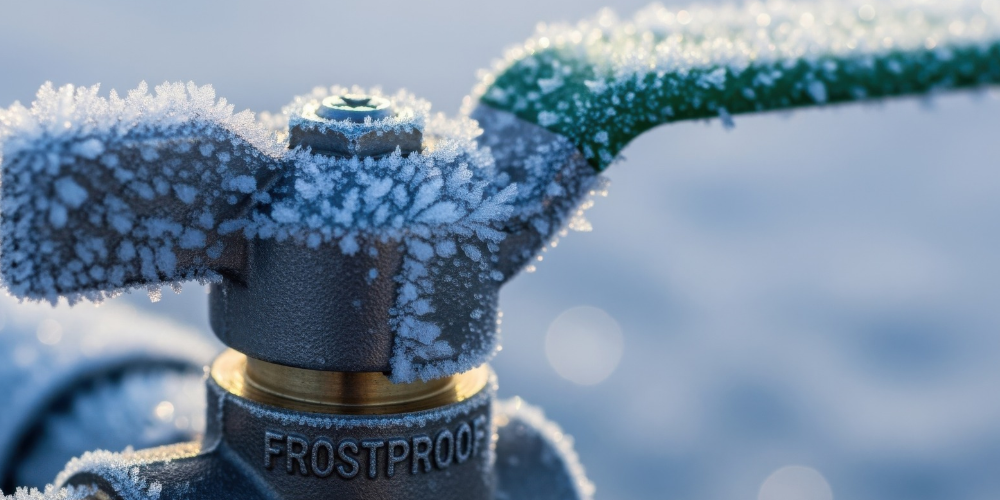
Every home has a few places where winter can find its way in. Do you know where yours are?
When temperatures drop in Central Iowa, homeowners hear plenty of reminders about protecting their plumbing. Disconnect the garden hose. Insulate exposed pipes. Keep the heat on.
It’s good advice. But it doesn’t explain something important.
Why do pipes freeze in some parts of a house while others are perfectly fine?
The answer often has more to do with where the plumbing is located than how cold it is outside.
A pipe running through a heated basement may have very little exposure to freezing temperatures. Another pipe, just a few feet away, might run along an exterior wall, through an unheated garage, or inside a cabinet where warm air doesn’t circulate very well.
That’s why winterizing your plumbing isn’t simply about following a checklist.
It’s about understanding your home’s weak spots.
Where Do Pipes Freeze First in a House?
Pipes are most likely to freeze in areas where they’re exposed to cold temperatures, poorly insulated, or separated from the home’s heated living spaces.
Common trouble spots include:
- Plumbing inside exterior walls
- Pipes in unheated garages and crawl spaces
- Kitchen and bathroom cabinets along outside walls
- Outdoor faucets and hose connections
- Plumbing near foundation openings or drafts
- Water lines serving additions or less frequently used rooms
Not every home has all these vulnerabilities. Construction, insulation, plumbing layout, and heating conditions make a difference.
But knowing where to look is a good first step toward preventing a frozen pipe.
Winter Weak Spot #1: The Pipe Behind Your Kitchen Sink
Here’s a place many homeowners overlook.
Open the cabinet beneath your kitchen sink.
If that sink is installed against an exterior wall, the plumbing behind it may be exposed to colder conditions than the rest of your kitchen.
The room itself might be perfectly comfortable. But inside the cabinet, particularly near the back wall, warm air may not circulate as freely.
During extreme cold, that difference can matter.
What can you do?
Take a look at where the water lines enter the cabinet. Notice any obvious gaps or drafts around the plumbing.
During periods of severe cold, opening cabinet doors can help warmer room air circulate around the pipes. Keep household chemicals safely away from children and pets when doing so.
If you notice significant drafts, exposed plumbing, or recurring problems with freezing, it may be worth having the area evaluated.
The goal isn’t to heat your kitchen cabinets.
It’s to make sure your plumbing isn’t sitting in an unexpectedly cold pocket of your home.
Winter Weak Spot #2: The Garden Hose You Forgot in October
You finished watering the garden weeks ago.
The lawn furniture is put away.
The garden hose? Still connected.
It seems harmless enough, especially if you have a frost-free outdoor faucet.
But frost-free doesn’t mean freeze-proof under every condition.
Many frost-free faucets are designed to shut off water farther inside the home, where temperatures are typically warmer. However, if a hose remains attached, water may not drain from the faucet as intended.
When that trapped water freezes and expands, it can damage the faucet or connected piping.
And here’s the frustrating part: you might not discover the damage until the faucet is used again.
What can you do?
Disconnect garden hoses before freezing weather arrives.
If your home has an interior shut-off valve for outdoor faucets, follow the appropriate winterization procedure for that fixture.
If you’re unsure whether your outdoor faucet is frost-free or how it should be winterized, ask a plumber.
Sometimes the simplest preventive step is also the easiest one to forget.
Winter Weak Spot #3: The Garage That Feels Almost Warm Enough
An attached garage can be deceptive.
Because it shares a wall with your house, you might assume the temperature stays relatively comfortable.
But garages often have less insulation, more air leakage, and significantly lower temperatures than the living spaces next to them.
If water lines run through an unheated garage, those pipes may be more vulnerable during prolonged cold.
This is especially worth considering if your garage contains a utility sink, laundry connections, or plumbing serving another part of the home.
What can you do?
Identify any exposed water lines in the garage.
Look for obvious drafts, damaged insulation, or areas where plumbing passes through exterior walls.
Pipe insulation and other protective measures may help, but the appropriate solution depends on how the space is constructed and how cold it gets.
If the plumbing is exposed to freezing conditions, it’s worth discussing whether additional protection is needed.
Winter Weak Spot #4: The Basement or Crawl Space You Rarely Visit
Not every basement is warm.
And not every crawl space stays above freezing.
A finished basement with conditioned air is very different from an unfinished area with exposed foundation openings, drafts, or limited heat.
Crawl spaces can be especially vulnerable when water lines run near exterior openings or through poorly protected areas.
What can you do?
Before winter, look for visible gaps, damaged insulation, and exposed pipes.
Pay attention to areas where plumbing enters or exits the foundation.
If your home has a crawl space that you rarely inspect, consider having a professional evaluate its plumbing before temperatures drop.
You don’t need to crawl into an unsafe or inaccessible area yourself.
The important thing is knowing whether vulnerable plumbing exists there.
Winter Weak Spot #5: The Room Nobody Uses
Think about the guest bathroom, basement utility room, or addition that doesn’t get much attention during the winter.
If a room is closed off, poorly heated, or located far from the home’s main heating system, the plumbing serving that space may be exposed to colder conditions.
A room doesn’t have to feel freezing for concealed pipes to be at risk.
What can you do?
Make sure heated areas receive adequate warmth, including rooms that aren’t used every day.
Avoid shutting off heat to rooms containing plumbing without understanding how the water lines are routed.
And if your home has an addition, converted space, or unusual plumbing layout, ask whether those water lines have adequate protection.
Can Pipes Freeze Even When the Heat Is On?
Yes.
Keeping your heat on is an important part of winter plumbing protection, but it doesn’t guarantee that every pipe in your home stays warm.
A pipe located inside a poorly insulated exterior wall, for example, may be exposed to much colder temperatures than the thermostat indicates.
Drafts, air leaks, and limited heat circulation can also contribute to the problem.
That’s why homeowners should pay attention to plumbing locations, not just the temperature displayed on the thermostat.
What Are the Warning Signs of a Frozen Pipe?
Sometimes the first sign is a faucet that suddenly produces very little water or no water at all.
Other warning signs may include visible frost on exposed piping or an unusual change in water flow during extremely cold weather.
However, reduced water flow can have several causes, so it isn’t always proof that a pipe is frozen.
If you suspect a frozen pipe, avoid using open flames, torches, or other unsafe heating methods.
If you notice a leak or burst pipe, shut off the water supply if you can do so safely and contact a plumber.
For homeowners in Des Moines, Altoona, Pleasant Hill, and surrounding Central Iowa communities, Advanced Plumbing can help evaluate suspected frozen pipes and plumbing concerns.
Do You Know Where Your Main Water Shut-Off Valve Is?
Here’s one winter plumbing question that has nothing to do with insulation.
If a pipe burst in your home tonight, would you know how to shut off the water?
Every homeowner should know where the main water shut-off valve is located and how to operate it.
Depending on the home, it may be located in a basement, utility area, or near where the water service enters the building.
If you’ve never looked for yours, add it to your winter preparation list.
Knowing how to stop the water supply quickly can help limit damage if a plumbing emergency occurs.
And if the valve is difficult to operate, leaking, or inaccessible, that’s something worth addressing before an emergency.
Your Five-Minute Winter Plumbing Walkthrough
You don’t need to inspect every inch of pipe in your home to start identifying potential problems.
Begin with five simple questions:
- Where does my plumbing run along exterior walls? Check kitchen and bathroom cabinets, especially those against outside walls.
- Have I disconnected my garden hoses? Don’t assume a frost-free faucet eliminates every risk.
- Are there exposed pipes in unheated spaces? Look at garages, basements, and accessible utility areas.
- Are any rooms or plumbing areas unusually cold? Pay attention to additions, guest bathrooms, and areas with limited heating.
- Do I know where my main water shut-off valve is? Make sure you can locate it before you need it.
You may not find anything concerning.
That’s good news.
But if you do discover exposed plumbing, significant drafts, or an area that’s consistently colder than the rest of your home, you now have a useful starting point for a conversation with a plumber.
The Best Winter Plumbing Protection Starts With Knowing Your Home
Two houses on the same street can experience the same winter weather and have very different plumbing risks.
One may have well-protected water lines running through heated spaces. Another may have plumbing inside exterior walls, an unheated addition, or a garage that gets colder than the homeowner realizes.
That’s why we don’t believe winter plumbing preparation should be a one-size-fits-all conversation.
The goal isn’t to convince every homeowner that they need new equipment or extensive plumbing work.
It’s to help you recognize where your home may be vulnerable and determine whether anything needs attention before temperatures drop.
Advanced Plumbing helps homeowners throughout Des Moines, Altoona, Pleasant Hill, and surrounding Central Iowa communities understand and maintain their plumbing systems.
Not sure where your home’s winter weak spots might be?
Bring us your questions. We’ll help you understand what to look for and when professional attention makes sense.
Contact Advanced Plumbing to discuss your winter plumbing concerns.